
 How to resolve AdBlock issue?
Where “automation” often refers to rule‑based workflows (e.g. “If customer confirms appointment → send confirmation email”), “AI automation” involves agents that can interpret, decide and act, often across multiple systems — combining AI reasoning with automation tools. This shift means you move from “if‑this‑then‑that” workflows to “intelligent workflows” that adapt, learn and improve.
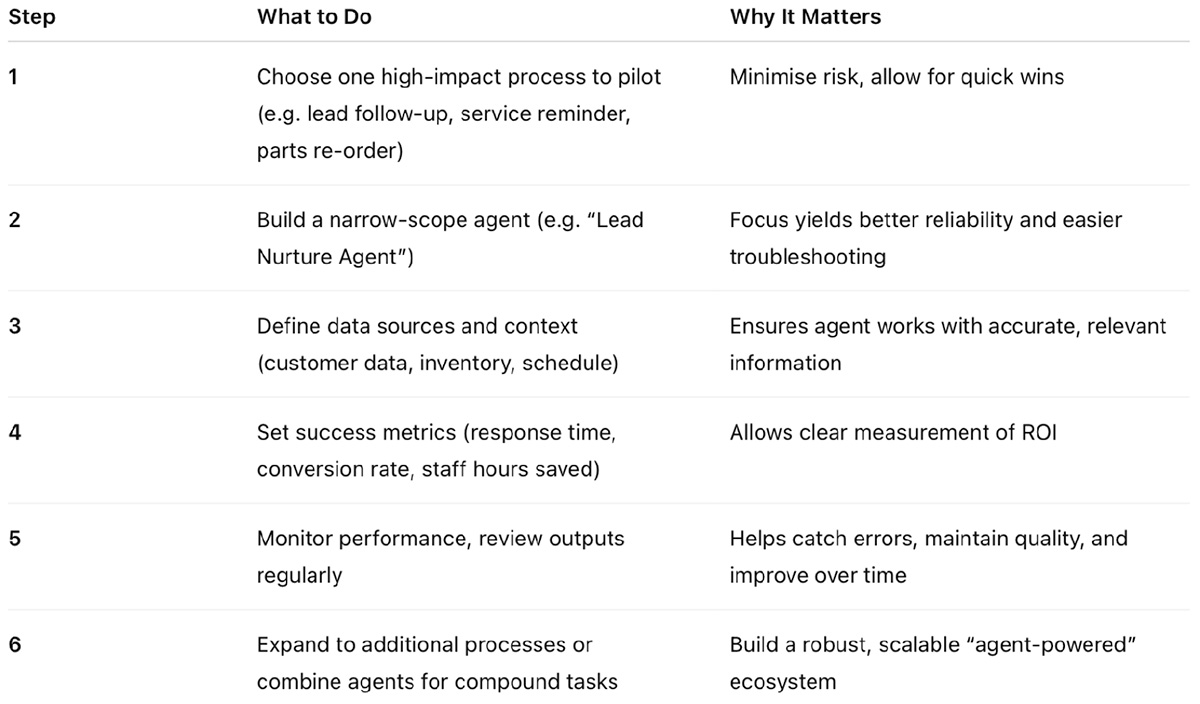
From recent industry learnings, when deploying AI Agents you should:





Editorial Address:
LandPower Publications LLP, Howbery Park, Benson Lane, Wallingford, Oxfordshire, OX10 8BA
Telephone:
+44(0)1491 837 117
Service Dealer is the UK’s leading news and information resource for Garden, Turfcare, Farm, ATV, Plant Hire & Construction and Outdoor Power Equipment